
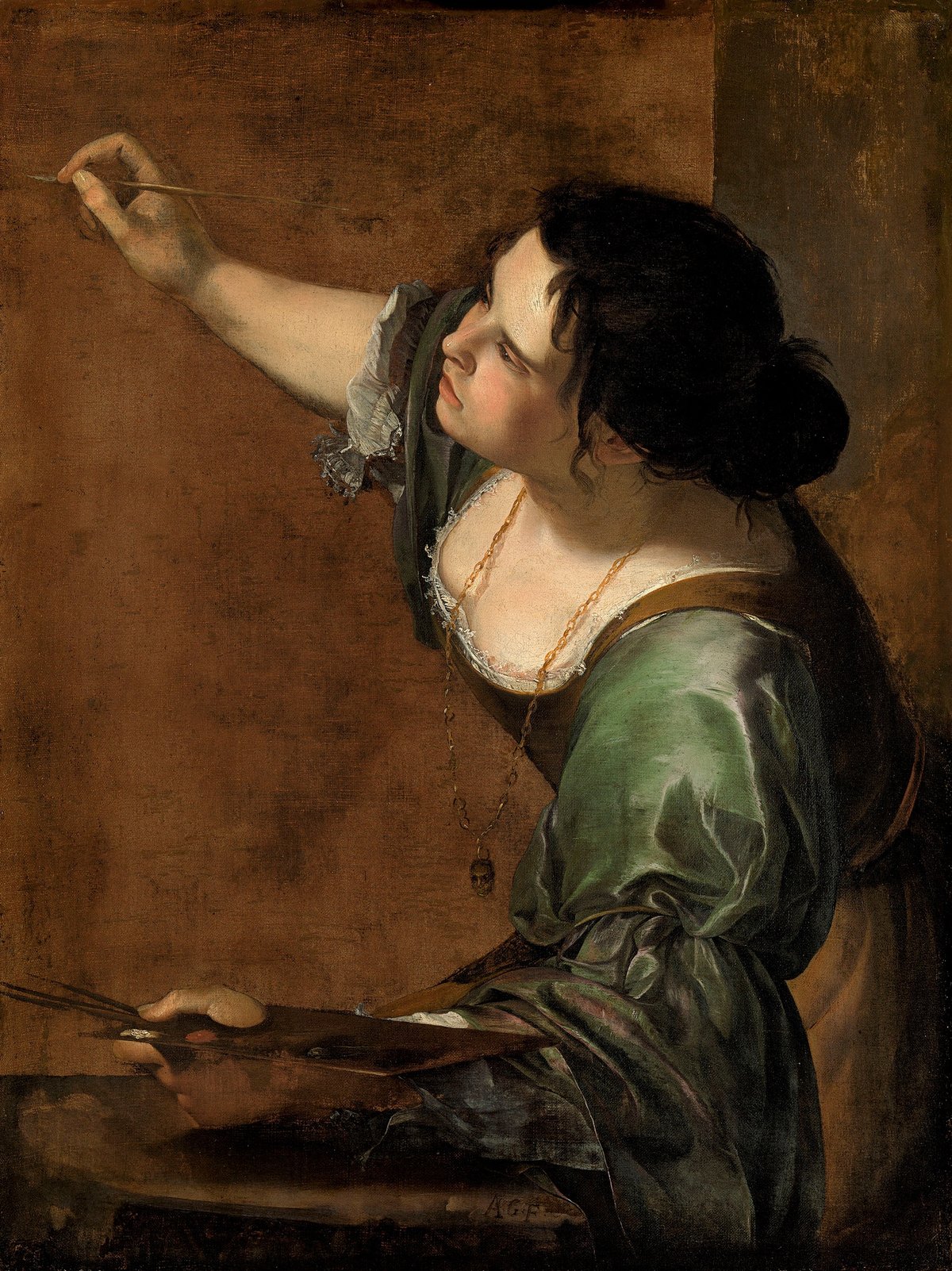
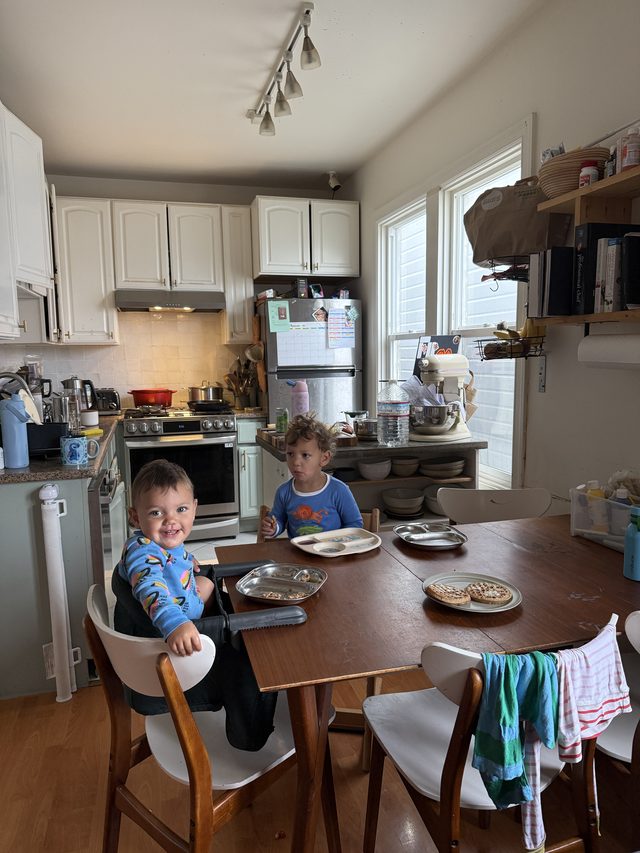
There are six people, one large dog, and one snake in my apartment.
Two bedrooms. One bathroom. Six hundred square feet.
Everyone is on top of each other, and everyone is over it.
There is a backyard I cannot afford to finish, so it sits out there unfinished, which is its own particular kind of daily reminder.
I am a stay-at-home mother. I have no funding, no partnerships, no technical background, and no college degree. My financial situation is spiraling badly enough that one of the things I am building is an app to help me get out of it, on the theory that if I can make it work for the hardest case I know, I can eventually hand it to other people in the same position.
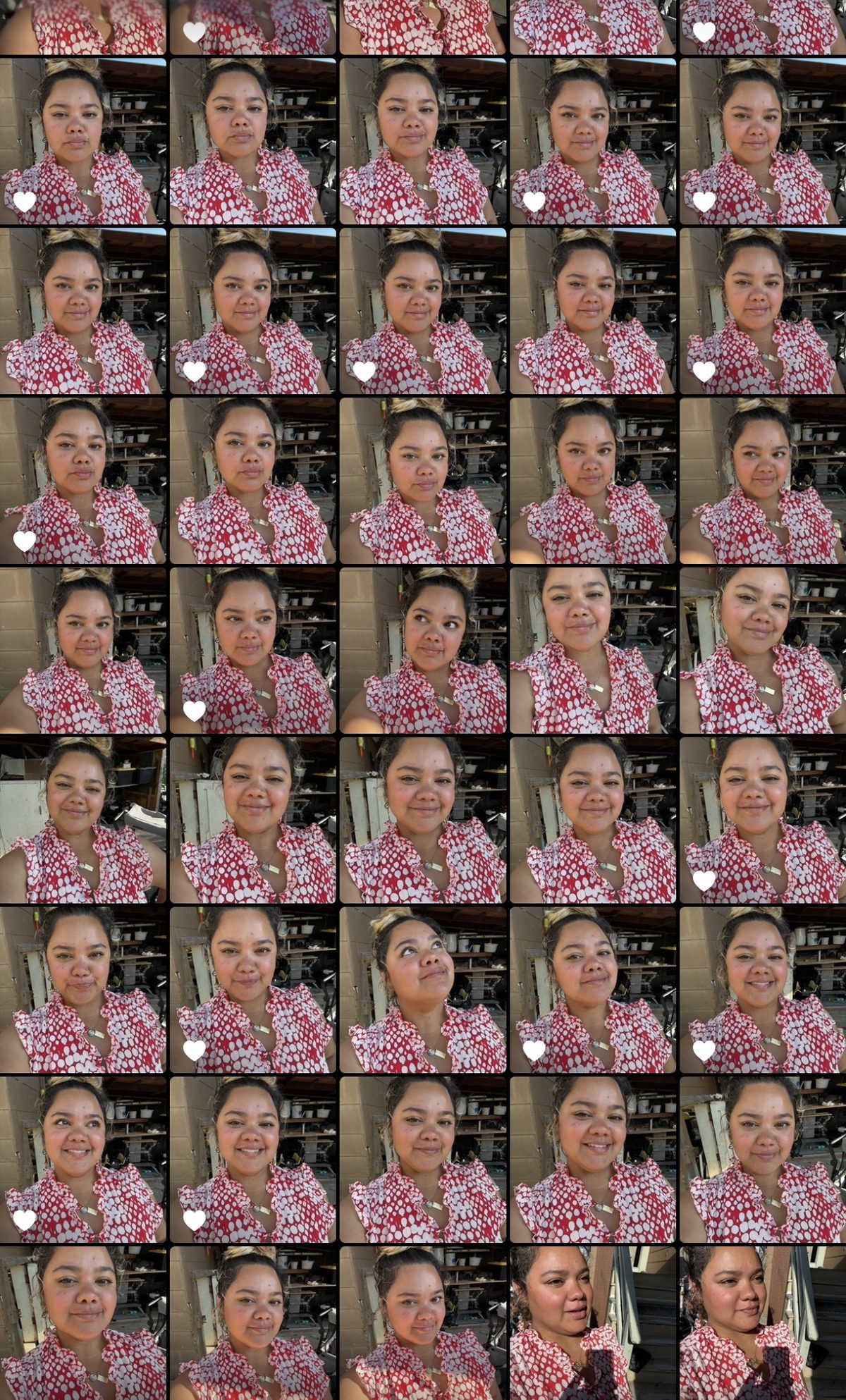
I want to be precise about the conditions because the conditions are the argument.
The invisible staff
Almost everything you have ever admired was made by someone with help.
Not always visible help.
Sometimes it looks like a spouse covering the rent for three years. A parent watching the children every Saturday. An assistant handling logistics. A cook. A cleaner. A ghostwriter. An editor. A cofounder who already knows how to code.
Sometimes it is the simplest version of all: enough money to order dinner instead of cooking it, and the two hours that would have gone to dinner going somewhere else.
That help is real infrastructure, and it is almost never listed in the credits.
We tell the story as talent and discipline because it flatters everyone involved. The truth is closer to this: the thing separating people who made things from people who only thought about making them was rarely the idea.
It was uninterrupted time and access to skilled labor.
I do not have either one.
I have a laptop, several subscriptions I probably cannot afford, and whatever time remains after everyone else is asleep.
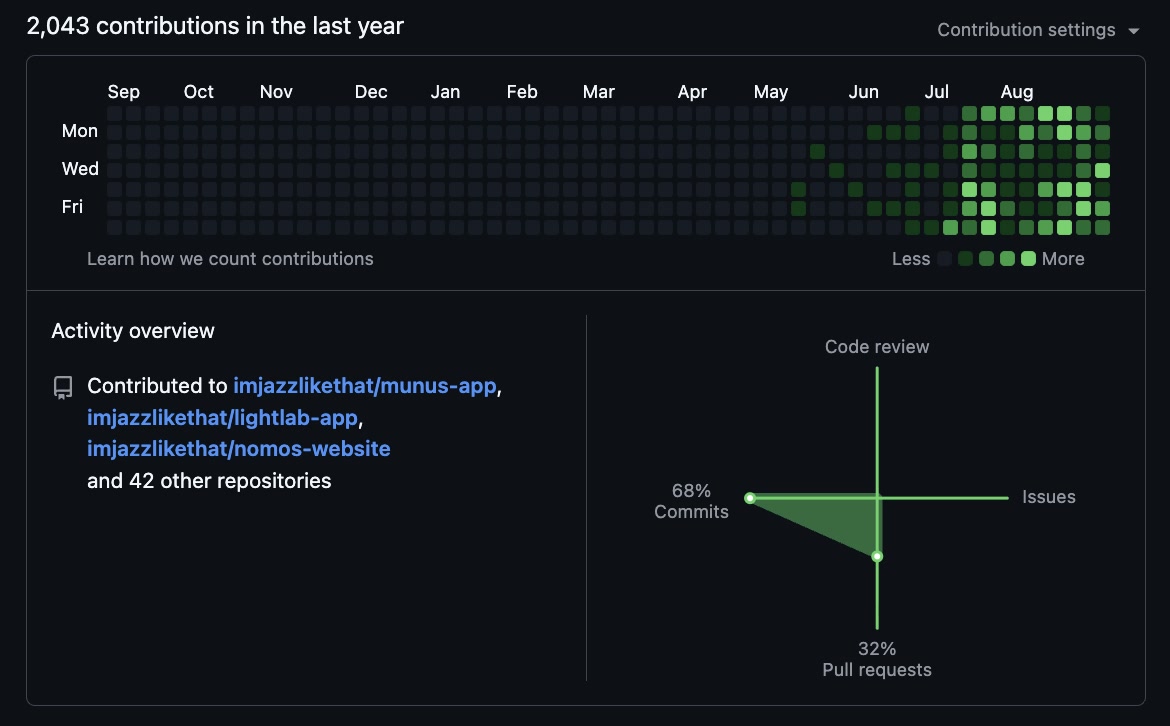
In August, my Cursor dashboard recorded 1.2 billion tokens across 172 cloud agents.*
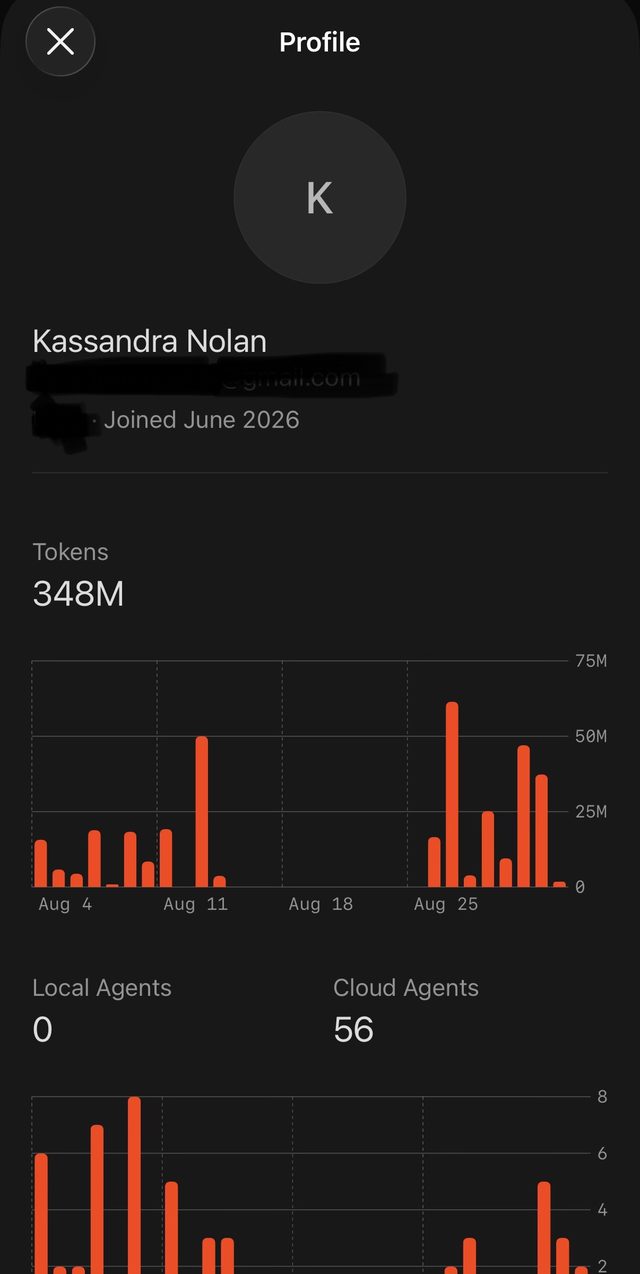
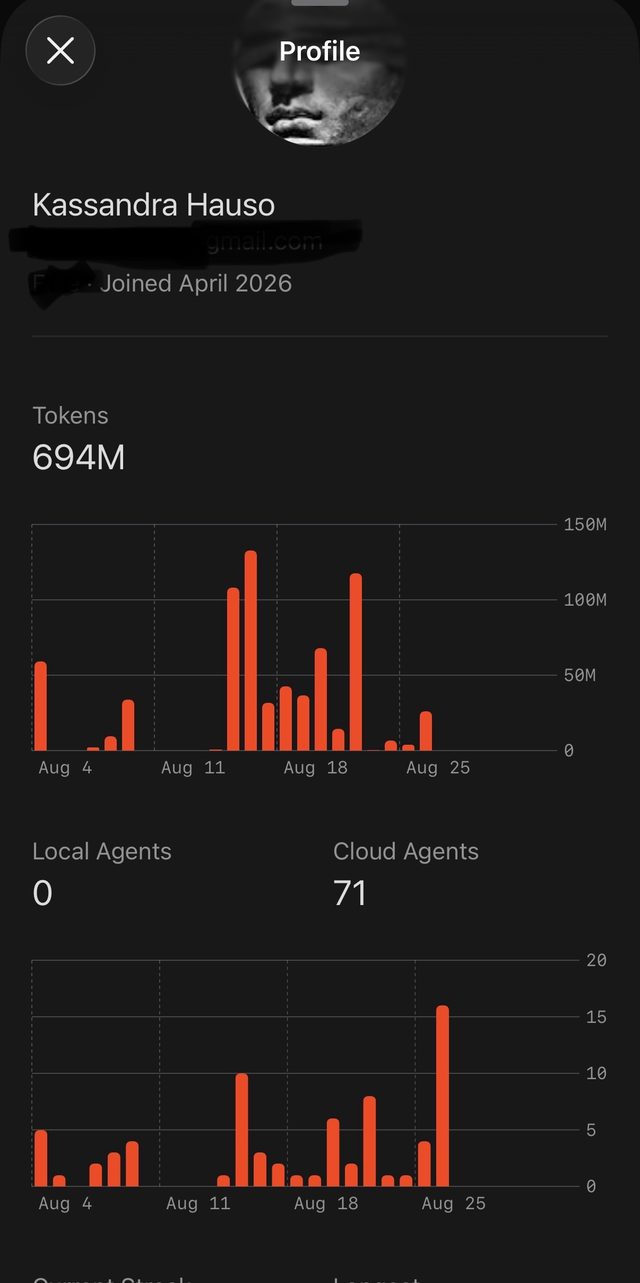
I initially thought that was my all-time usage.
It was not.
That was August. 🤣
It is an absurd number to type out. It is also what it looks like when someone without colleagues tries to build a company anyway.
The computer I accidentally hijacked
The laptop is not even technically mine.
It is my daughter’s.
Almost everything I have built lives inside her user folder because that is where I started. When I began, I did not know enough about computers to understand that I should create my own profile.
That is how little I knew.
That is also how far I have come.
I now understand enough to know that an agent could probably walk me through moving everything. I also understand enough to be terrified of breaking the paths, losing access to something important, or creating a problem I do not yet know how to repair.
So I have simply hijacked her computer.
It frequently runs out of application memory. It has roughly 100 gigabytes of storage left, which I have been told is not ideal for what I am asking it to do. Sometimes it stops cooperating entirely.
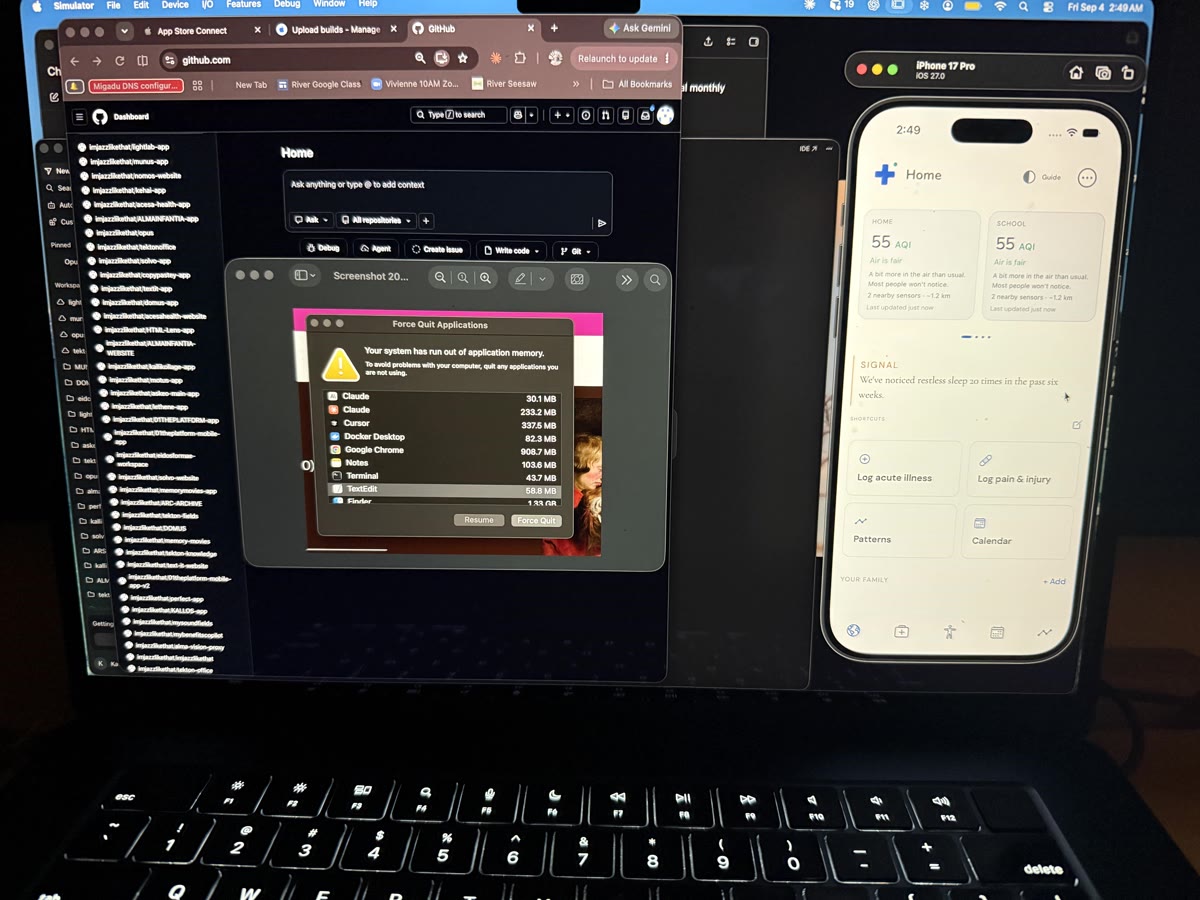
That is why cloud agents have become so important.
Half the time, I am building from my phone because the computer has stopped working or because I am standing in the school pickup line, sitting at a park, holding a sleeping baby, or waiting through an appointment.
The work can continue somewhere other than the machine in front of me.
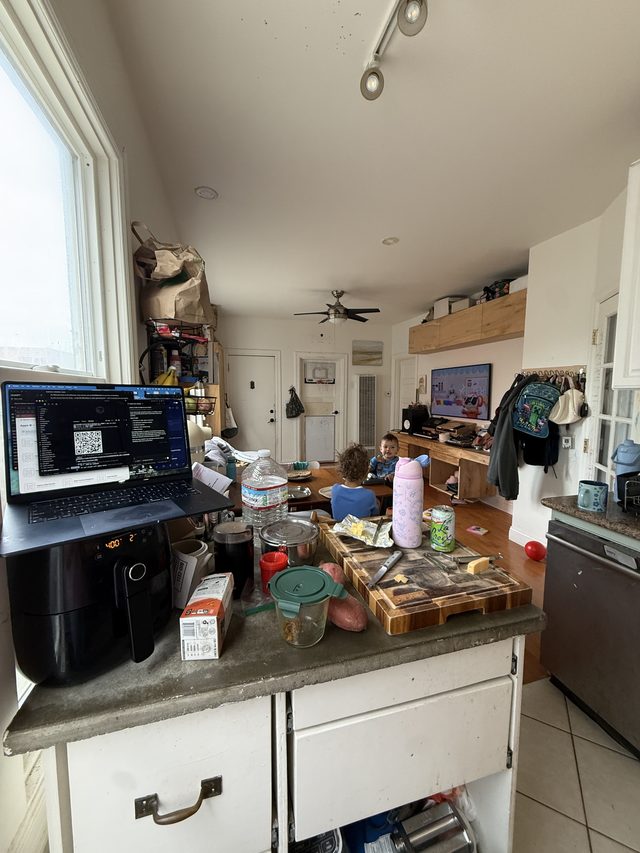
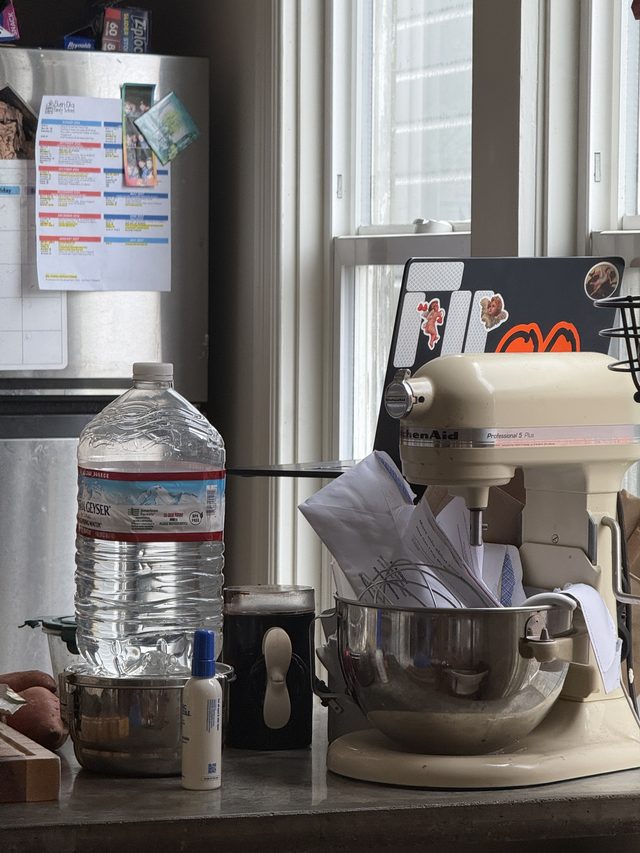
I use Cursor, OpenAI’s Codex, Claude, and Grok because the work cannot stop every time one subscription reaches a limit, one account runs out of credits, or one computer runs out of memory. When one door closes temporarily, I move to the next one and keep building.
I cannot help wondering what this company could become with actual money, proper equipment, uninterrupted time, and access to the people who already know how to do all of this.
Then I look at what already exists without those things.
That is the part that keeps me going.
What actually changed
I have had some of these ideas for years.
They were fantasies, the kind you describe to someone at a party and then never mention again because the distance between the idea and the thing is an engineering team you cannot hire.
That distance collapsed.
Not to zero.
But from impossible to merely very hard, which is an entirely different category of problem.
That is the part of the AI conversation I do not hear discussed honestly enough.
The conversation seems trapped between “it is autocomplete and all of this is fake” and “it is coming to take everyone’s job and end the world.”
Neither one describes what happened to me.
What happened to me is that a person without capital, credentials, or technical connections became able to build.
That is not a small thing to leave out of the story.
I understand why people are afraid. Jobs are real. Livelihoods are real. The possibility that powerful technology will be used carelessly, unfairly, or primarily to enrich people who already have power is not imaginary.
I am not interested in dismissing that fear. I am also not interested in pretending these tools are magic or worshiping the companies that make them.
But refusing to engage with the technology will not make it disappear.
I think the only honest way forward is to think creatively about what these systems can do, what they should never be permitted to do, and how human beings can learn to work in collaboration with them without handing over responsibility.
The human part is still the work
AI can reason through a system with extraordinary speed.
It can inspect code, compare architectures, find contradictions, organize information, and carry out work that would once have required skills I did not possess and people I could not afford.
But I still have to bring it back to the human being.
Again and again.
A model can think logically about a crying child. It has not stood in a dark room at two in the morning, exhausted and afraid, trying to decide whether something is truly wrong or whether everyone simply needs sleep.
It can map the operating needs of a self-employed mechanic. It has not spent the entire day thinking about the next job, the current job, the unpaid invoice, the cost of a part, and whether there will be enough left to be present and unstressed at home.
It can design a property-management workflow. It has not felt the paralyzing anxiety an immigrant landlord may experience before sending a message in a language that is not her first, worried that one imperfect sentence could make her sound careless or unprofessional.
It can create a chore checklist for a teenager.
I still have to explain that “clean your room” means one thing to an overwhelmed parent and something completely different to a fourteen-year-old.
Human life contains a chaos factor.
We are emotional. We contradict ourselves. We avoid things that frighten us. We forget what happened at the doctor. We understand instructions differently depending on how tired we are. We know what we should do and sometimes cannot make ourselves do it anyway.
That is not an edge case to remove from the system.
That is the system.
Maybe artificial intelligence will understand those experiences differently in ten years. Right now, I am the person responsible for grounding every product in the reality of the people who will use it.
The AI makes my thinking executable.
It does not replace the thinking.
Not knowing how it is done
I have no training in this industry.
I do not know how things are supposed to be built.
For a while, I treated that as the thing to hide. I have stopped because it turns out to produce decisions I might not have reached otherwise.
I use these tools in ways that are probably wrong and definitely work. I build in an order nobody taught me.
No one showed me the “right” way to build software or how a trained engineer would approach it. So I follow the problem in front of me, ask questions when I get stuck, and learn what I need as I go.
That doesn’t mean the rules don’t matter. Some protect the entire system. Others are simply how things have always been done. I don’t always know which is which, so I question both, test carefully, and pay attention to what breaks.
Here is the clearest example.
In software, MVP means minimum viable product. Ship the smallest possible thing, put it in front of users, and let them tell you what to add.
That model assumes a user with slack in their life.
Someone willing to try your half-built thing, tolerate the gaps, and provide thoughtful feedback about what is missing.
The people I build for have no slack.
They are managing children, work, households, appointments, school newsletters, medical records, bills, repairs, and an endless stream of small responsibilities.
They will not tell you what to add.
If they tell you anything, it will be what to take out because everything you built is one more thing demanding attention from someone who has none left to give.
For me, MVP means meaningful viable product.
The question is not, “Is this the smallest thing I can ship?”
The question is, “Does this remove load on first use for someone with nothing left?”
A tool that adds even a little unnecessary friction to that person is not an early version.
It is a failure, and it will be deleted by eleven o’clock that night.
I did not arrive at that conclusion from a book.
I arrived at it because I am the user, and I have deleted a lot of apps at eleven o’clock at night.
The apps came from somewhere
The apps are not exercises in proving that I can make software.
They came from things that happened to people I love.
Acesa Health began with my oldest son.
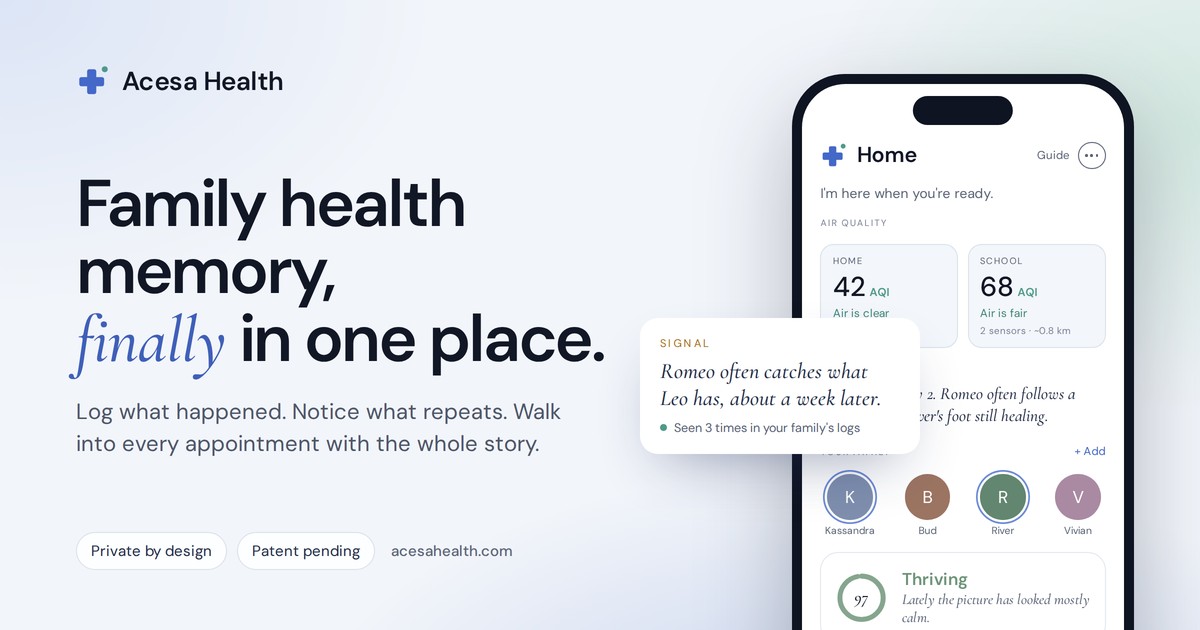
He had his gallbladder removed as an infant. The signs and symptoms had been present for months, but I was a twenty-four-year-old mom. I knew something was wrong without having a system for recording what I was seeing, recognizing the pattern, or communicating the entire history clearly.
Years later, with three more children, I still found myself arriving at the doctor and forgetting what the hell had happened.
When did the fever begin?
Who became sick first?
Was the cough there before the vomiting?
Was this the flu, COVID, or simply four children passing the same virus back and forth?
The idea returned when everyone in my house got sick and I was trying to reconstruct patient zero from memory.
This time, the tools had finally caught up with the idea.
So I began building the family health memory I had needed at twenty-four.
Domus came from watching my mother.
She is a widow and an independent landlord managing two buildings by herself. English is not her first language, and communication can carry an anxiety that native speakers rarely have to consider.
Does this message sound right?
Does it sound professional?
Am I forgetting something important?
When were the smoke detectors changed? How old is the water heater? When was that repair completed, and where is the receipt?
Domus is meant to be a simple, elegant property-management app for an independent landlord, including the landlord who does not speak English as a first language and should not need a legal department to communicate confidently or care for a building responsibly.
Munus began because I have two teenagers and spent part of the summer losing my goddamn mind trying to get them to do anything.

“Done” means different things to different people.
A clean room does not simply mean that a teenager looked at it and decided it seemed fine. It means the clothes are put away, the floor is clear, the desk is wiped down, and there is enough space to vacuum and mop.
There should be no confusion about what finished means.
Then school began approaching.
One of my children had failed a class despite earning eighties and nineties on the tests. The problem was not comprehension. It was missed notes, unchecked requirements, and the accumulation of small responsibilities that never became a coherent plan.
So the app grew a study layer.
Classwork. Notes. Study guides. Flashcards. A clear plan for what needs attention before the missing details become a failing grade.
These are not personas I invented in a conference room.
They are my children. My mother. My household. Me.
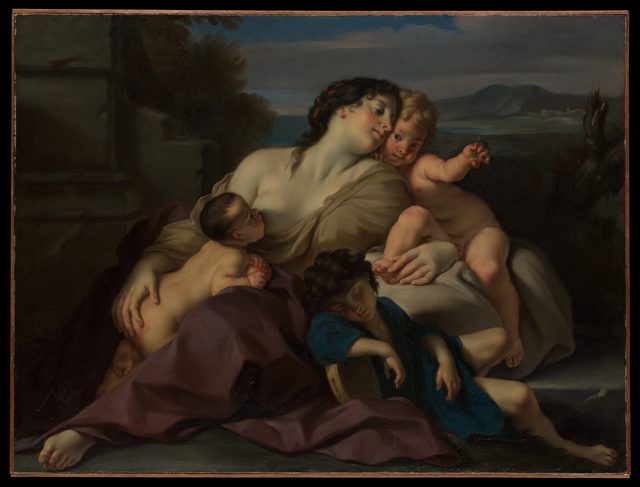
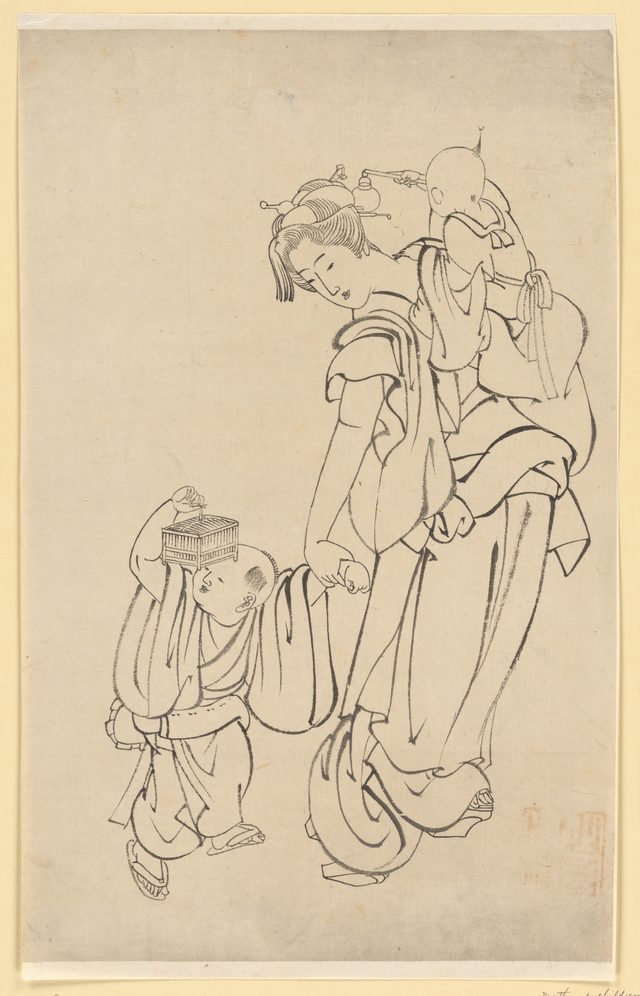
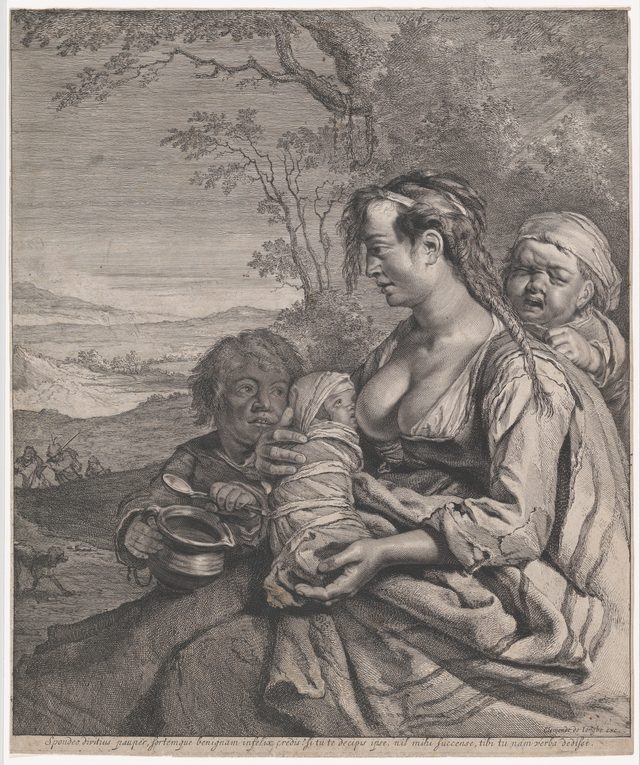
About these artworks
Art history. Carlo Cignani, a leading painter of the Bolognese school, painted Charity around 1680. For centuries, when European artists needed one image for the highest of the virtues, they painted a mother with more children than arms, and Cignani’s version shows her holding all three at once: one nursing, one asleep against her, one climbing at her shoulder.
Mother and Children in Summer Night, an ink drawing from the school of Katsushika Hokusai, shows a mother on an evening walk with a baby carried on her back reaching for her hair ornament while a small child holds her hand and lifts an insect cage. It is not an allegory. It is an ordinary night of caregiving, observed closely enough to be worth drawing.
Cornelis Visscher engraved Roma Mother with Children around 1657, near the end of his short life. A Roma mother sits in an open landscape holding a swaddled infant while her other children press in around her, one of them crying; the mother stays steady at the center of all of it.
What these pieces mean to me. Across three centuries and three very different traditions, artists kept arriving at the same image: a mother holding several children at once, and holding steady. Art history mostly cast her as a symbol of virtue or a subject of sympathy. It rarely imagined her as the person building something. The people in these pictures are the users I build for, and the position I build from.
Survival is not the only reason to make something
Some of what I am building comes directly from necessity.
The financial tool exists because I need it.
The family health app exists because I needed it.
The household and school systems exist because my family is living the problem now.
But some of the work comes from wonder.
I am building a private digital museum for children’s artwork so that the pile of drawings on a kitchen counter can become something worth preserving and sharing.

I am building a photography app that behaves like a light meter and a teacher, with assignments designed around walking through your own city and learning to see it differently.
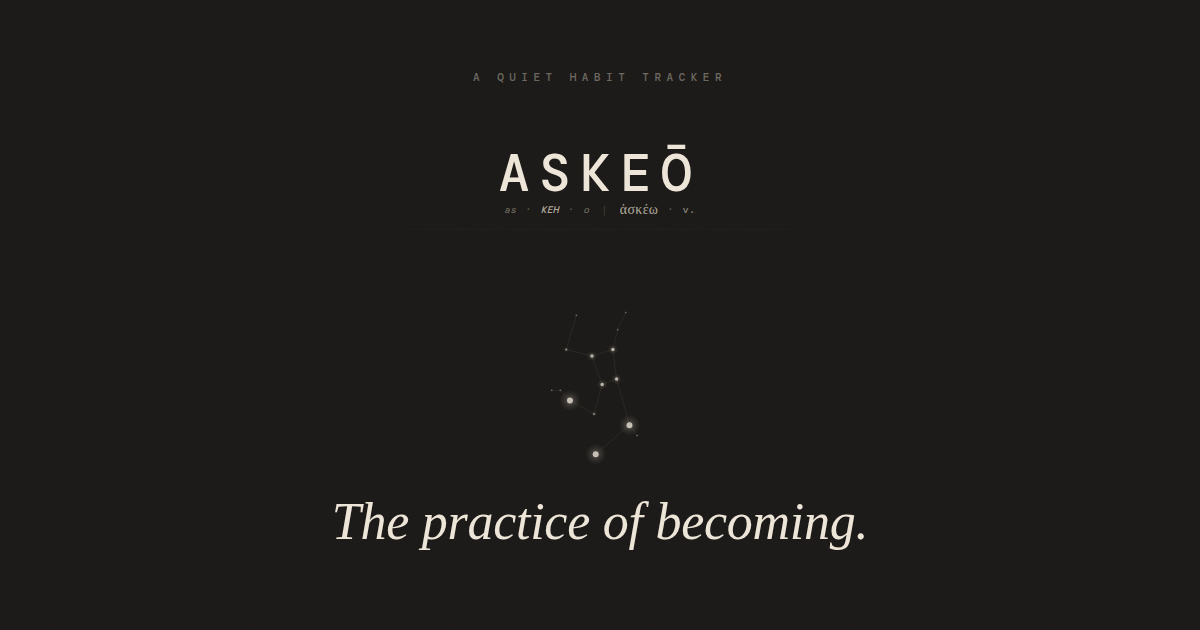
I am building Askeō, a habit app that refuses to punish you for being human.
I am building Kehai, a private record that helps people understand what their bodies may have been trying to tell them.
Nobody needs every one of these things to survive.
That matters too.
After years of ideas going nowhere, being able to make something exist is not a small pleasure.
Wonder and necessity are not opposites.
I may be doing this backward
Sometimes I wonder whether I am doing the entire founder thing backward.
Maybe I was supposed to stop at the idea, create a pitch deck, find someone who knows someone, and ask for enough money to hire people to build it.
People I know in technology have watched founders raise millions of dollars with less architecture, less product definition, less voice, less branding, and sometimes ideas they did not even think were particularly good.
But those founders had degrees.
They had connections.
They knew how to get into the room, or they knew someone who could bring them into it.
Who the fuck am I?
I am a stay-at-home mother with no degree, building from her daughter’s laptop in a tiny apartment because a conventional job would send most of its income directly to childcare.
Maybe building all of it first is backward.
Maybe it is the only evidence I knew how to make.
I did not know how to convince someone that I could build a company, so I began building the company.
The products have architecture. They have identities, systems, privacy positions, intelligence layers, design languages, and operating philosophies. Several are approaching beta testing.
I did not arrive with a napkin sketch and ask someone else to imagine the rest.
I imagined the rest.
Then I started making it real.
The part where I am supposed to be embarrassed
I even asked one of the AI tools to create a fake Vogue feature about Askeō and Kehai.
It was a vision board.
I wanted to see what it might look like if beautiful wellness apps built by a mother in San Francisco were treated as serious design objects.
I had it create a fake 40 Under 40 article too. 🤣
I know how that sounds.
It is early to talk that way. Almost nobody reads these essays. People occasionally look at my posts without interacting. So far, one random person has kindly left a comment.
At this point, this Journal is partly a public company record and partly me leaving evidence for my future self.
I joke that I am in my early Kanye-running-around-New-York-trying-to-get-someone-to-listen phase.
Not yet the “I guess we’ll never know” phase.
I cannot wait for the day I return to these essays and think:
I guess we always knew.
This is me betting on the opposite.
Maybe it is delusional to believe the company could become as meaningful as I think it can.
But every company begins as something visible to its founder before it is visible to anyone else.
Call this my coal era. Scientifically imperfect, emotionally accurate.
The pressure is real.
So is the possibility.
What access would change
I am proud of what I have built alone.
I do not believe I am supposed to do everything alone forever.
Cloud agents have changed how far I can get without capital, an engineering team, operational support, or uninterrupted time. They have not eliminated the value of any of those things.
They have made the gap visible.
I can now imagine what would happen if I had the proper tools.
A computer that did not run out of application memory.
Enough credits that I did not have to stop at the edge of an important problem.
Enough childcare to think for several uninterrupted hours.
Engineers who could strengthen the systems.
Designers, researchers, advisors, and collaborators who understood what these products could become.
Capital would not create the vision.
The vision is already here.
Capital would give it room.
An invitation
I do not know who is reading this.
Maybe you work at Apple and know someone who wants to put a better computer into the hands of a solo founder already documenting what she can build with one that barely keeps up.
Maybe you work at one of the AI companies whose tools have made this possible and want to understand what cloud agents look like outside a demo, inside the life of a mother building between naps, meals, museums, appointments, and school pickup.
Maybe you are an engineer, designer, investor, researcher, journalist, parent, landlord, mechanic, teacher, or simply someone curious enough to see the diamond before it has been cut.
Maybe you want to offer advice, make an introduction, buy me a coffee, leave a tip, test an app, or watch whether I can actually pull this off.
I am probably doing parts of it backward.
I am definitely doing parts of it the hard way.
But I am doing it.
This is why it has to work.
This is why I believe it will.
And maybe some people will want to see that happen.