VOGUE
May 2026
Issue No. 14
The Quietest Apps on Your Home Screen Just Became the Most Beautiful Things You’ll Own This Year.
In a year defined by louder wellness, full-body scans, NAD drips, $400 sneakers, the most sophisticated thing you can do may be to choose less. Meet Askēō, the habit tracker behaving like a fashion accessory, and Kehai, the health app that gathers the scattered evidence of a life in a body and keeps it as a private archive.
Askēō · iPhone · askeo.co
The Quiet Flex
On the habit tracker that refuses to clap for you.
A quiet habit tracker
ASKEŌ
as · KEH · o | ἀσκέω · v.
The practice of becoming.
There is a new kind of status symbol, and it does not glow. In a culture of streak anxiety and confetti-cannon wellness, of apps that scream you did it for drinking water, Askēō arrives like a linen shirt in a room full of sequins. It is a habit tracker, technically. It feels more like a small stone you keep in your pocket.
Everything about it is lowercase, and that is the point. The word itself is old Greek, to practice, to train, and the app treats discipline the way the Stoics did: not as performance, but as devotion. You choose a few practices. You show up. Once a day, you say so. That is all. No badges. No leaderboard. No push notification pretending to be your friend.
Nothing here resets you.
What it does have is texture. A grid of tonal squares, your last four weeks rendered like an Agnes Martin study, deepening in shade the more often you returned. A single line of borrowed wisdom on your home screen, Marcus Aurelius or Julian of Norwich, chosen for where you actually are.
Twenty-eight days · the practice grid
And here is the detail that tells you someone thought about this: when you break a streak, the app quietly stops showing you quotes about achievement and starts showing you ones about recovery. It does not reset you. Nothing here resets you. Missed days simply stay open, like a door left ajar.
Discipline is not punishment. It is the quiet act of choosing yourself again, today, one more time.
The science is real and, refreshingly, honestly graded. Every claim wears a small pill telling you whether the evidence is strong, moderate, or simply a framing, honestly held. Breathwork that has actually been studied. Morning light. The unglamorous research on how habits truly form: slowly, gently, over more days than the internet promised you.
Twenty-one mornings, then it steps back.
When you are ready for more than tracking, there are the journeys: quiet, guided arcs, one day at a time. Calm. Presence. Sleep. Attention. Seven mornings to begin again. And the centerpiece, askēsis: twenty-one mornings, a Stoic practice made small. On day twenty-one, the journey does not end. It hands you a habit and steps back.
Erewhon meets the Apple Store, yes, but really it is closer to a tea ceremony. An app that remembers, so that you can forget, and then return.
At $8.99 for life, Askēō is the least expensive thing on our list this year, and perhaps the one most likely to remain with you.
Begin quietly.
Start the journey.
- Platform
- iPhone. Free to try.
- Price
- $8.99, once. No subscription.
- Where
- askeo.co
Kehai · keh-hai · 気配
The App That Whispers
In a category built on alarms and streaks, Kehai would rather help you notice.
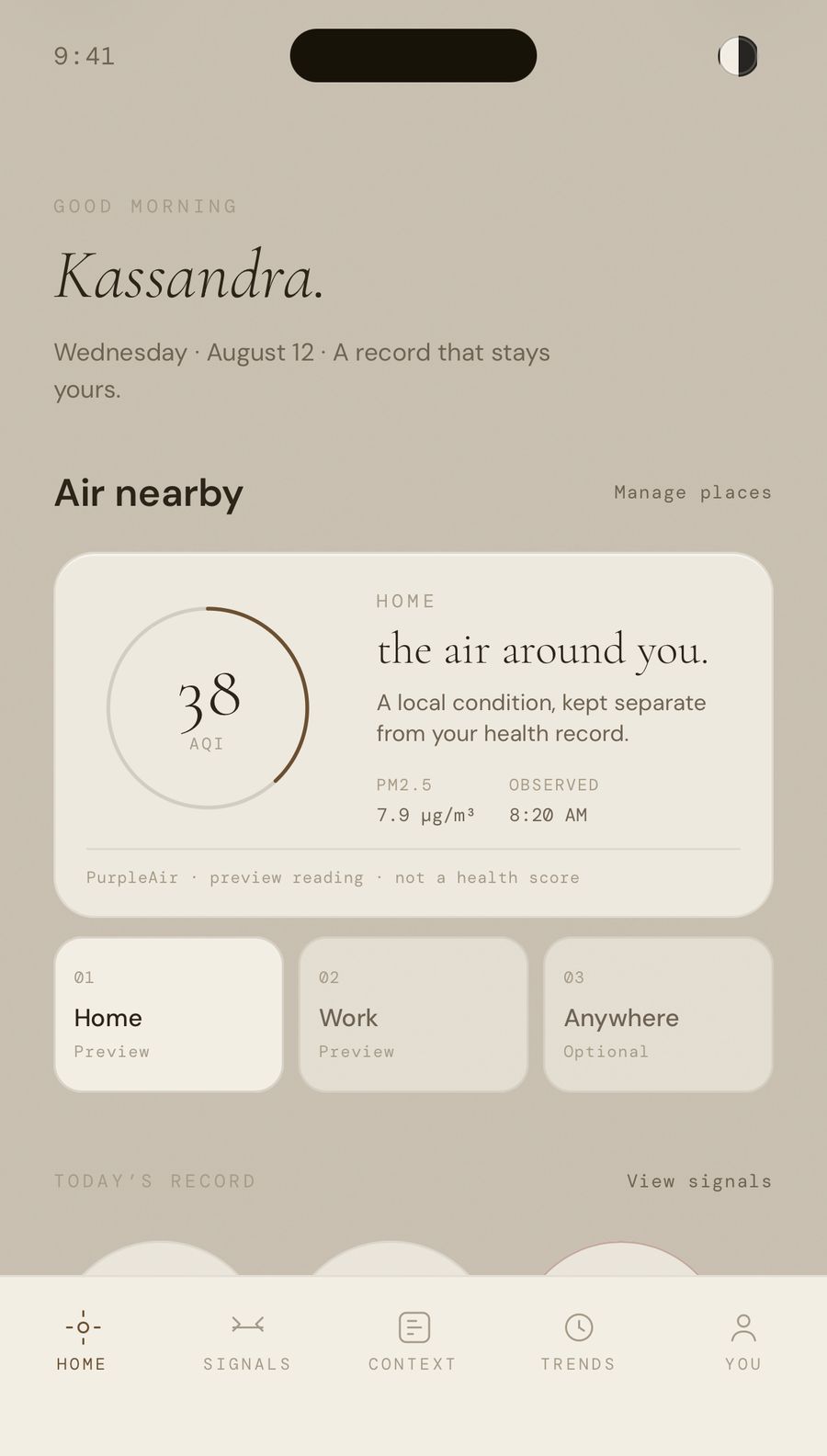
Open Kehai and you are greeted, not graded. There is no score announcing whether you have been good. No dashboard demanding improvement before you have even had coffee. An orb inhales and exhales on an eight-second cycle. The screen simply says hello.
This is Kehai, pronounced keh-hai, from the Japanese 気配: a presence you sense before you can name it. It is a fitting name for an app built around the quiet signals a body produces every day, long before those signals become conclusions.
One continuous memory.
Health information rarely lives in one place. The scale remembers your weight. A watch or a ring remembers your sleep. Your phone remembers your steps. A laboratory PDF remembers your bloodwork. Somewhere in your own memory is the date the headaches began, whether the fatigue came first, and what changed around the same time.
Kehai brings Apple Health data, smart-scale measurements, environmental readings, and manual entries into one continuous timeline. It does not manufacture certainty from incomplete information. It arranges what already exists so that you can see it together. The effect is less like opening a health dashboard and more like entering a beautifully kept private record.
Your body, held as something worth studying.
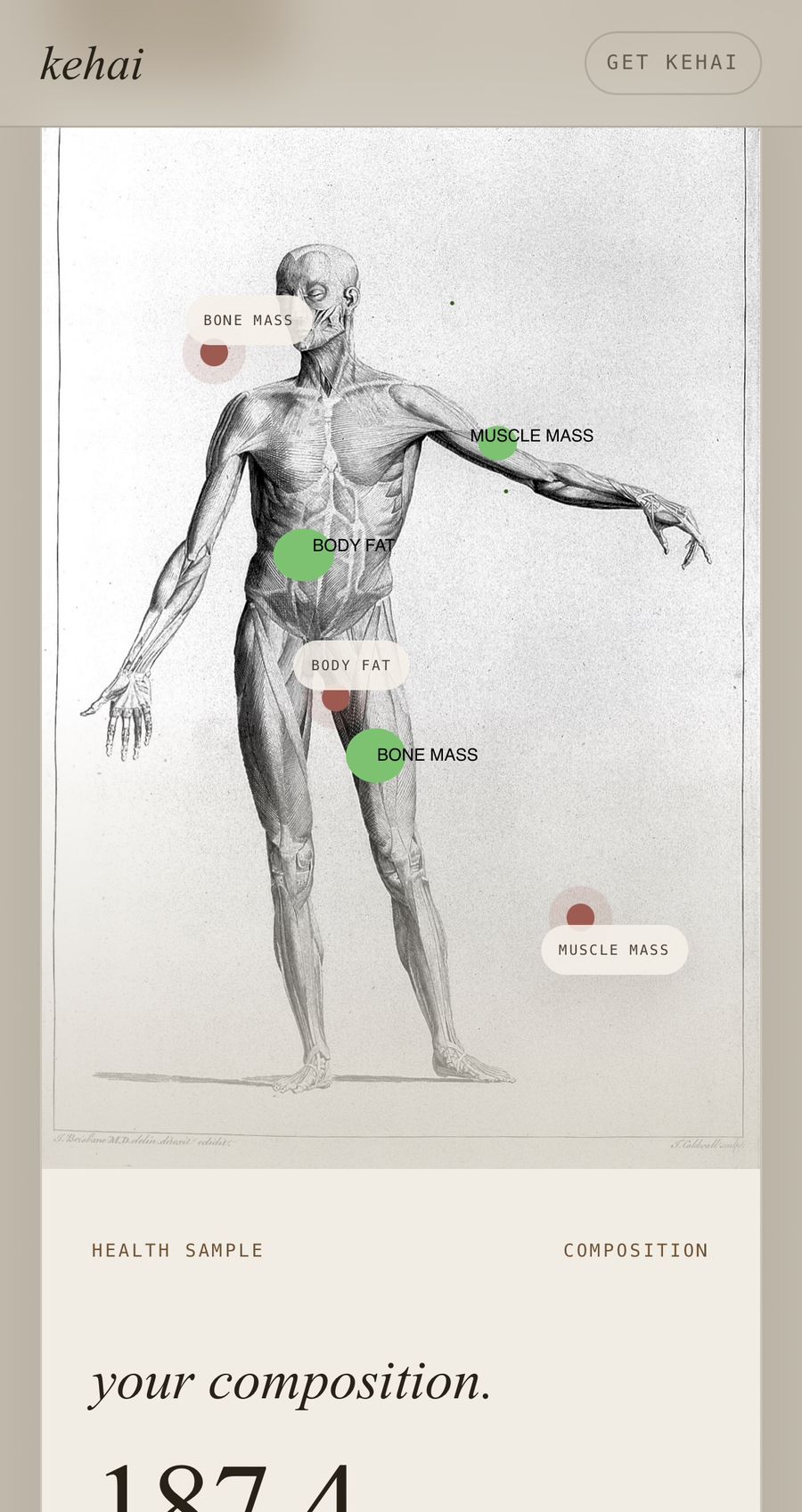
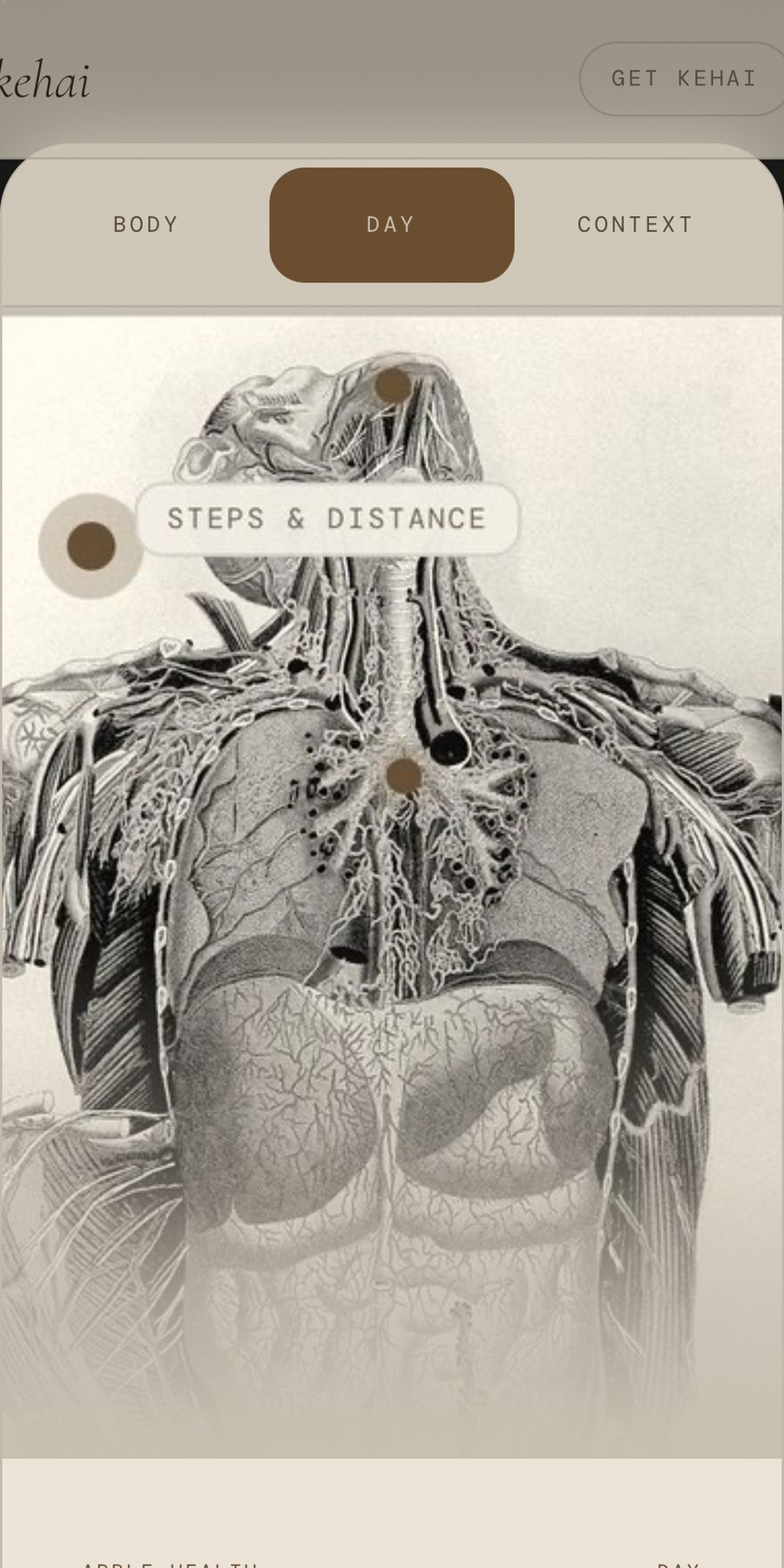
Kehai presents the body through historical anatomical artwork rather than anonymous icons and generic bar charts. Musculature, circulation, bone, and the body’s other systems appear through detailed engravings, each selected to correspond with the information surrounding it.
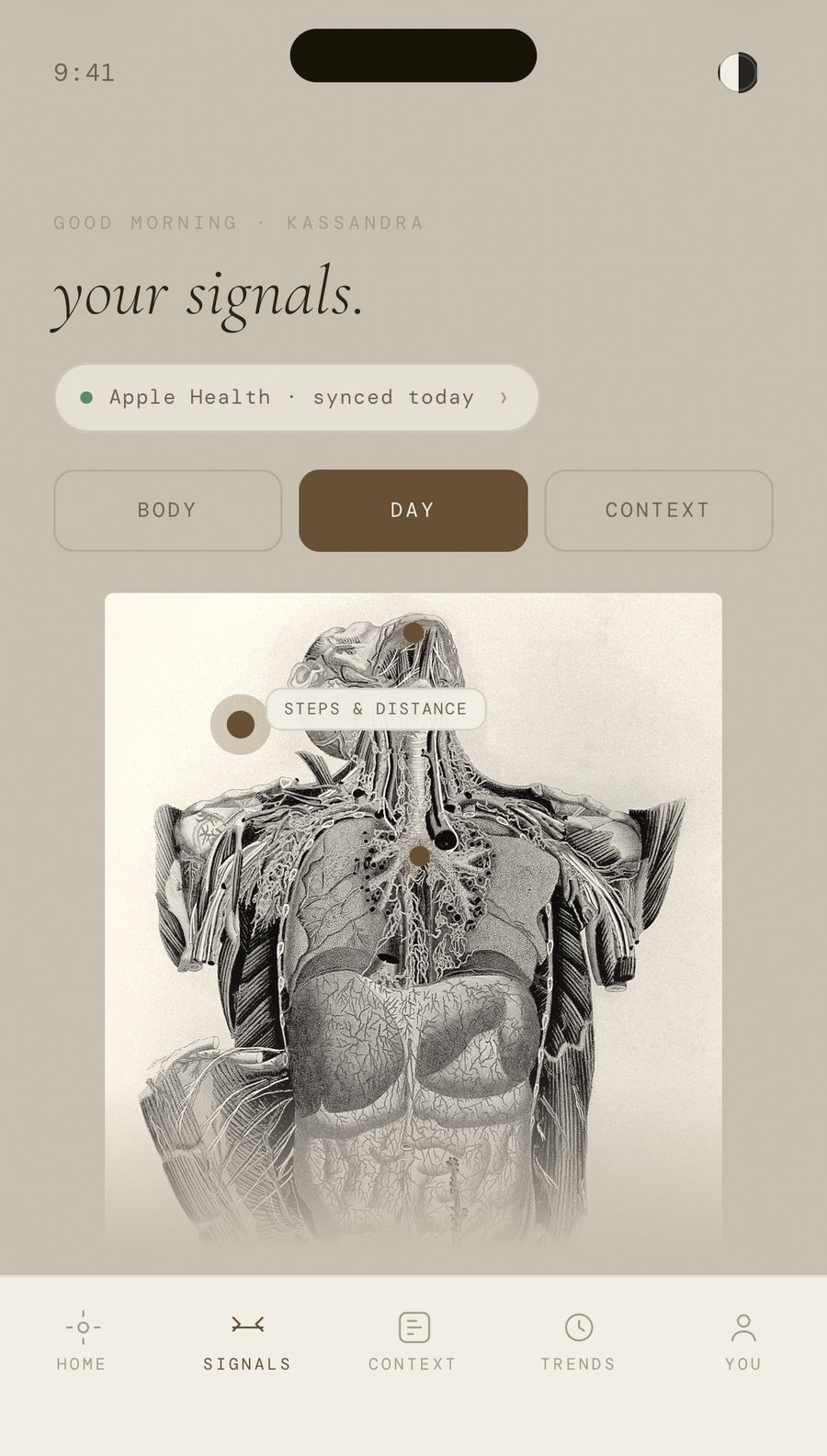
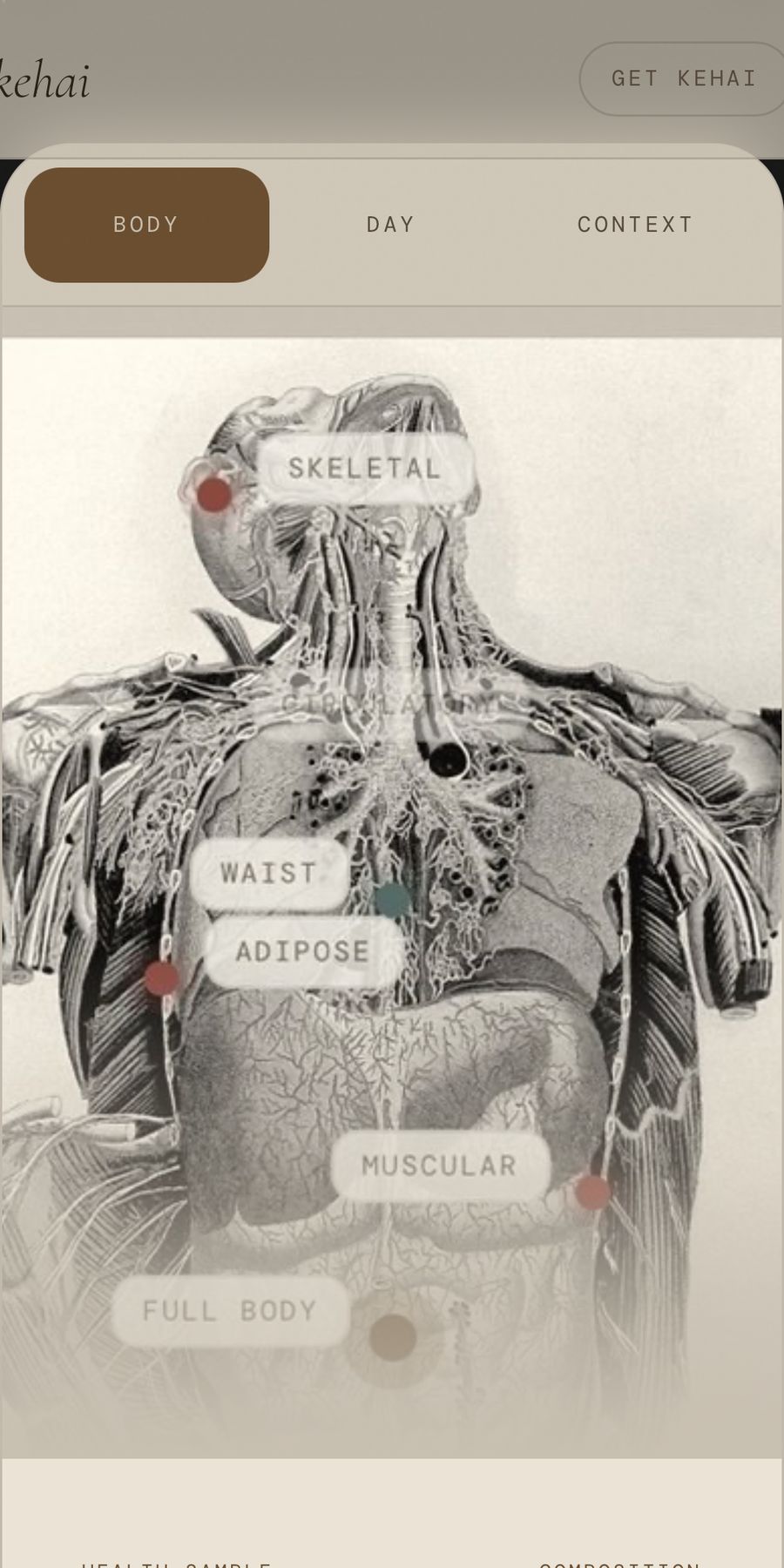
The artwork changes the emotional character of the data. A heart-rate entry beside an anatomical study of the circulatory system does not feel like a report card. It places an ordinary measurement inside a longer human effort to understand the body.
Your information becomes something to study with curiosity, not something to fear or perform.
What was measured and what was estimated.
Kehai is unusually honest about where numbers come from. A scale may measure weight directly while estimating body fat, muscle mass, water, bone mass, or visceral fat through a formula. Most apps present those values with the same visual authority. Kehai does not.
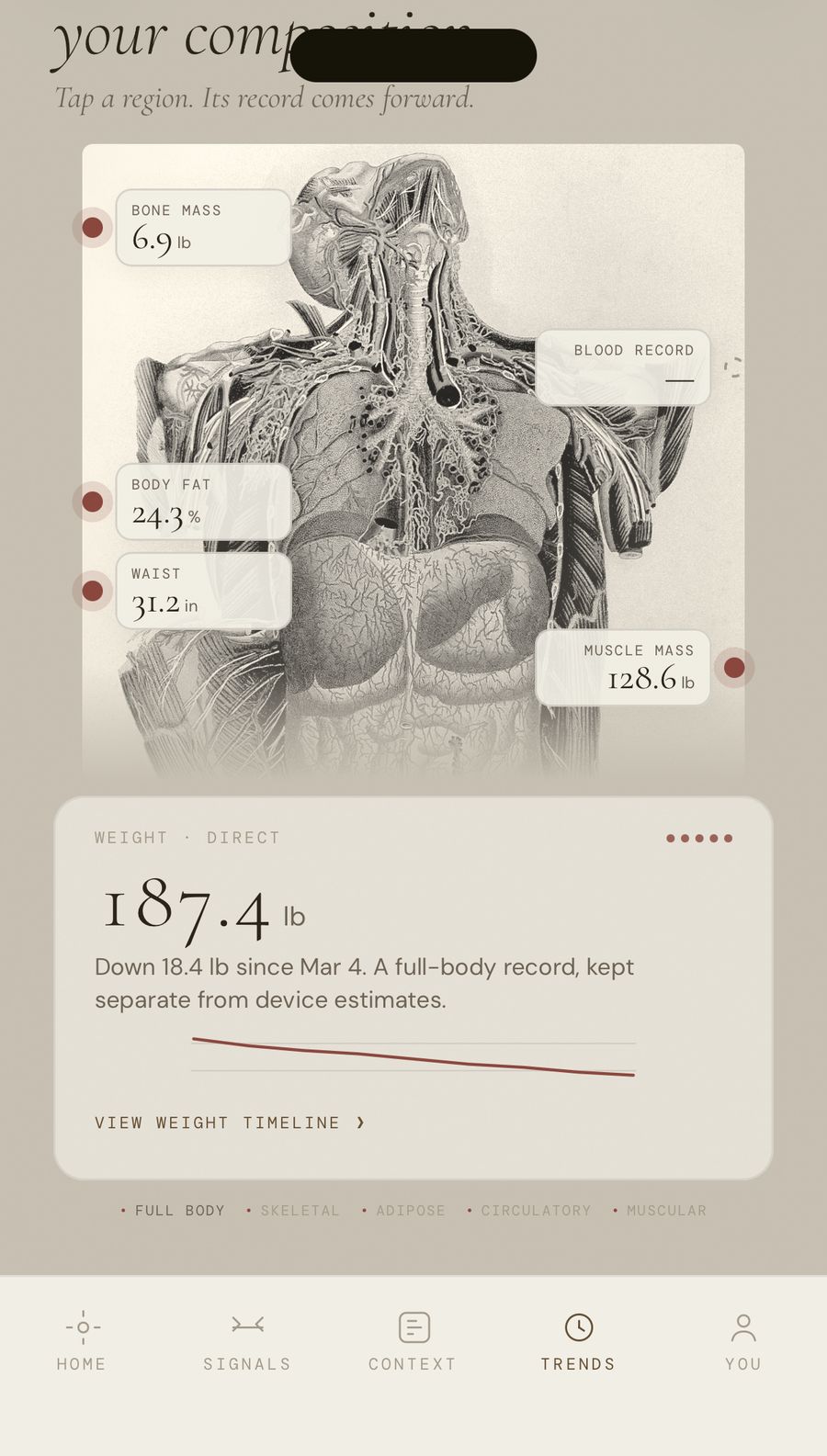
Measurement confidence dots distinguish direct measurements from estimates. The ledger labels whether information came from a device, a calculation, or something entered by hand. Tap a measurement and Kehai explains its source, what can influence it, and how confidently it should be read.
The distinction is small enough to feel elegant and important enough to change how someone understands the number in front of them. The app is not simply preserving health data. It is preserving the context required to read that data responsibly.
It notices without pretending to know.
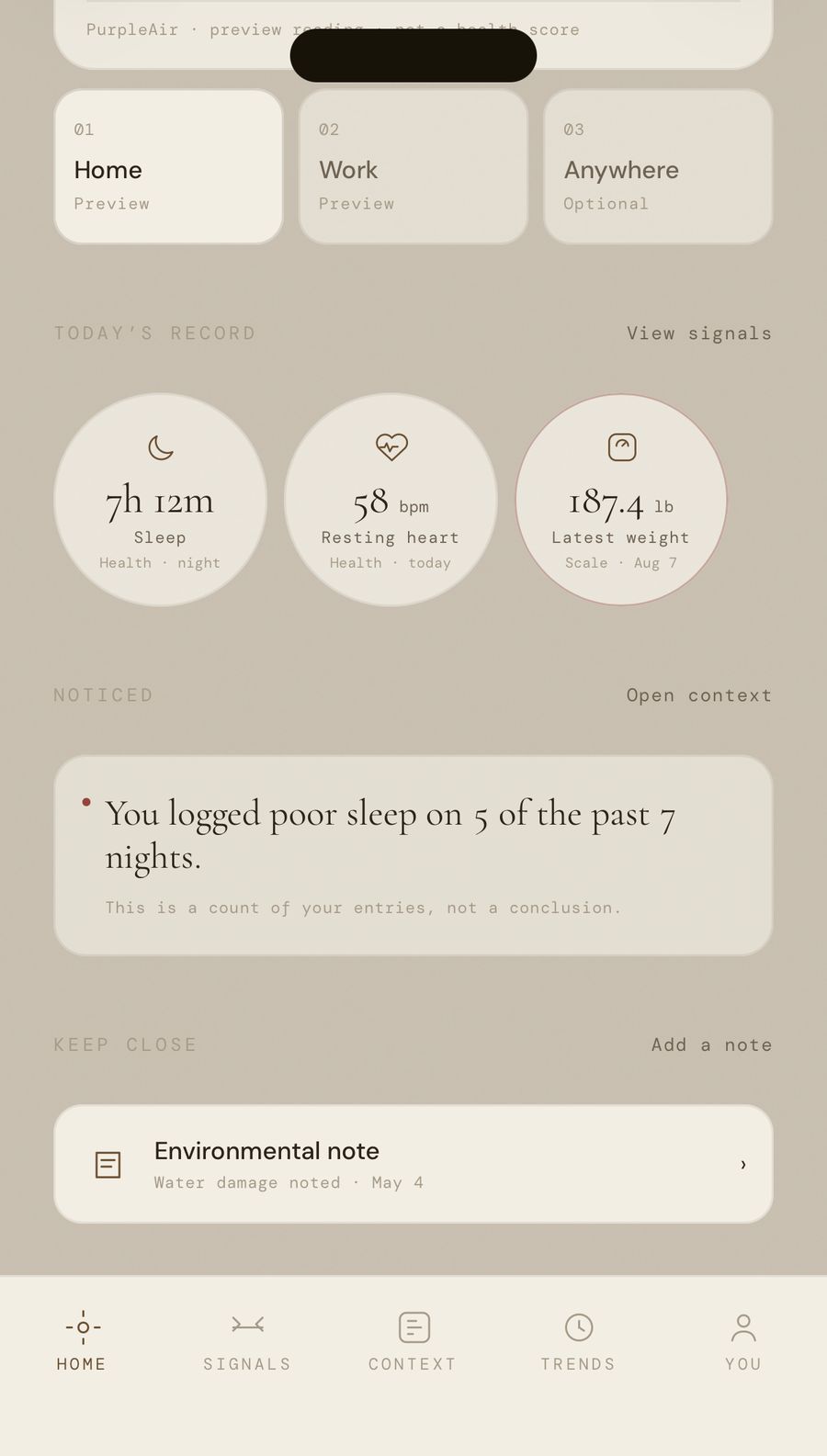
Over time, Kehai can surface what has repeatedly appeared in the record. You logged poor sleep on five of the past seven nights. Your ferritin results have appeared several times across your history. A symptom and a life event were recorded during overlapping periods. Then it tells you exactly what that observation means:
This is a count of your entries, not a conclusion.
That sentence may be the most important design decision in the entire app. Kehai does not diagnose. It does not turn proximity into causation. It does not frighten someone with a confident-sounding theory assembled from incomplete information. It remembers what happened, shows what overlaps, and helps you form a better question. Sometimes that question is for yourself. Sometimes it is worth bringing to a doctor.
A library, not a prescription.
The Body Library explains the measurements Kehai holds, from hydration and heart rate to bloodwork and body composition. The writing is intentionally plain. It explains what a measurement represents, why it may move, and what its limits are, without pretending to prescribe what anyone should do next.
Learning, not a prescription. The distinction matters. People are surrounded by health numbers they have never been taught to understand. Kehai treats comprehension as part of care. It does not assume that access to a result is the same thing as knowing what the result means.
Health technology without the clinical coldness.
Kehai’s visual worlds move between warmth and precision. Dune is limewash, paper, grain, and morning light. Stone is cool charcoal and quiet contrast. Neither feels like a hospital portal or a fitness competition. The experience is closer to a private journal, a museum archive, or a beautifully composed book. Calm enough to return to. Clear enough to trust.
That restraint is not decorative. It is functional. Health information can already carry fear, shame, and uncertainty. The interface does not need to add another layer of alarm.
Kehai.
Your body is telling you something.
It helps you notice.
- Platform
- iPhone, with Apple Health.
- Status
- In development.
- Made by
- NOMOS Industries, San Francisco.